An Old Fashioned Blog About a Fringe Surfing Trip
My wife and I were looking for some Autumn Sunshine at a place where you could catch good waves. We like to explore when we’re on holiday, so wanted somewhere we could drive around and not be confined to one resort. The Canary Islands were an obvious choice, but which one?
It turned out that we probably picked the best one – Lanzarote.
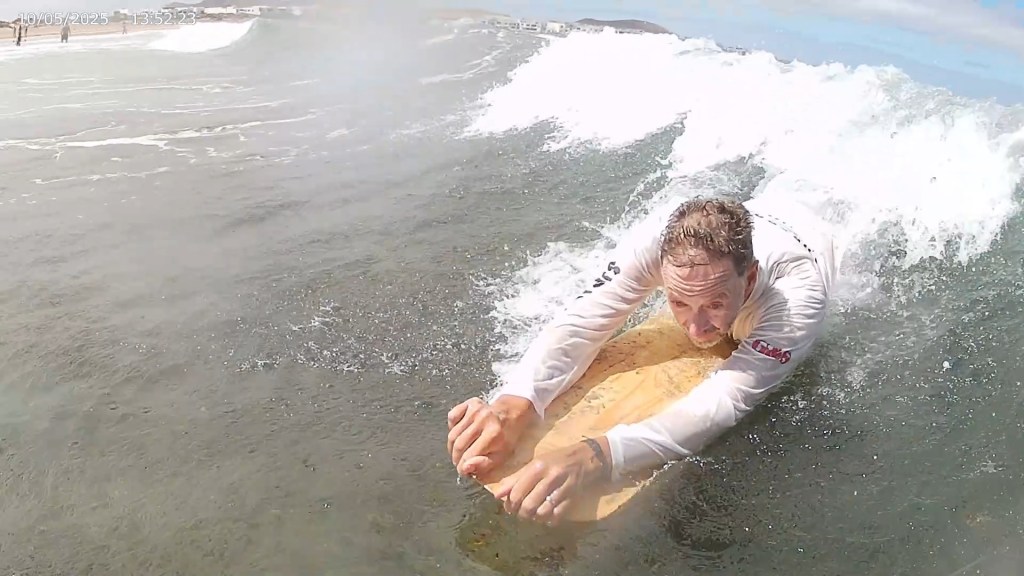
That’s not just me saying that. A local we spoke to explained the advantages of the Volcano Island. Because of it’s size and it’s location in the Atlantic, there’s a good chance you’ll get some surfable waves within a short drive. If the wind is affecting the east side, drive to the west side.
We took our boards (my Skidboard and Sharon’s Hotwalls Flyer) and two Little Skidda handplanes. The boards were packed in their flight bag with a couple of wetsuits as protection, and the handplanes and fins were in our cases. We flew with British Airways. They might have been a bit dearer, but there were no issues with the oversized bag and it arrived safely at each airport.
I’d read up about the Surf Shops on the island and there were two that I wanted to visit. The first was Nomads Land in Teguise. This is the town that has a market every Sunday. We had wandered around all the stalls, found a cool Surfwear Seller called Paralelo 28 (really good quality Tees and Hoodies), and then made our way to Nomads.
There’s a lot of lovely stuff there. My favourite was a Tom Wegener Alaia which was about twenty years old and beautiful. I bought a really nice T-shirt with artwork design and some local Mojo wax (maybe the best smelling wax ever?). Best of all was the owner! Very cool, very chilled and very friendly. I asked where the best surf was on the island. He said ‘La Santa’. I said ‘Is it safe?’ He gave a wry smile and said ‘There’s rocks.’ I’ll say more about La Santa in a bit.
Our first bit of boarding was at a chance stop. We were heading up the island on the east and saw a smallish beach, so turned into the town of Arrieta
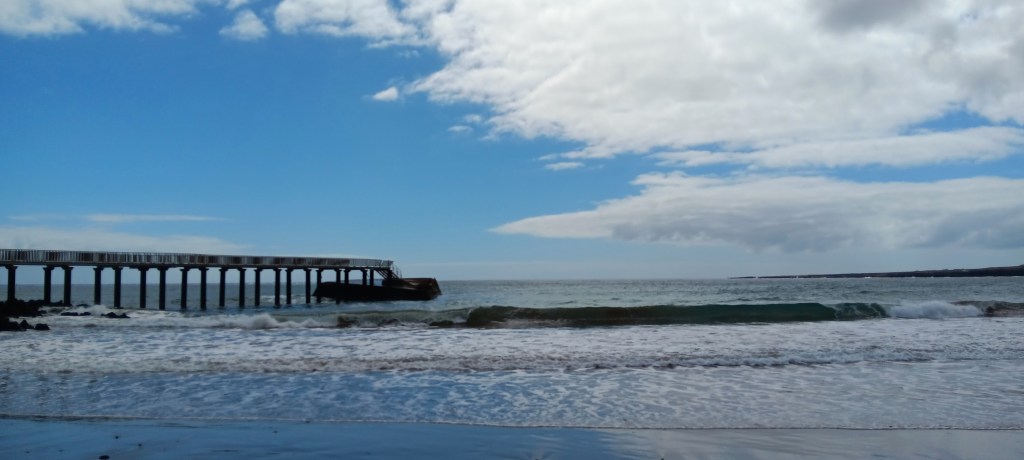
We had stumbled upon Playa de la Garita, a very good surf spot when the conditions are right. We were there at around low tide which was fine for us. As the day went on, footsurfers arrived. Their spot was at the left of the photo. There looked like a drop or ledge that pushed the waves up. We were told later that there is a reef out there. Arrieta is a nice little town with cafés and restaurants, including one on the beachside. That restaurant has a car park, which could be tempting to park in, but there is a sign stating ‘Customers Only’. We found parking spaces in the town. Arrieta is definitely a beach we will return to.
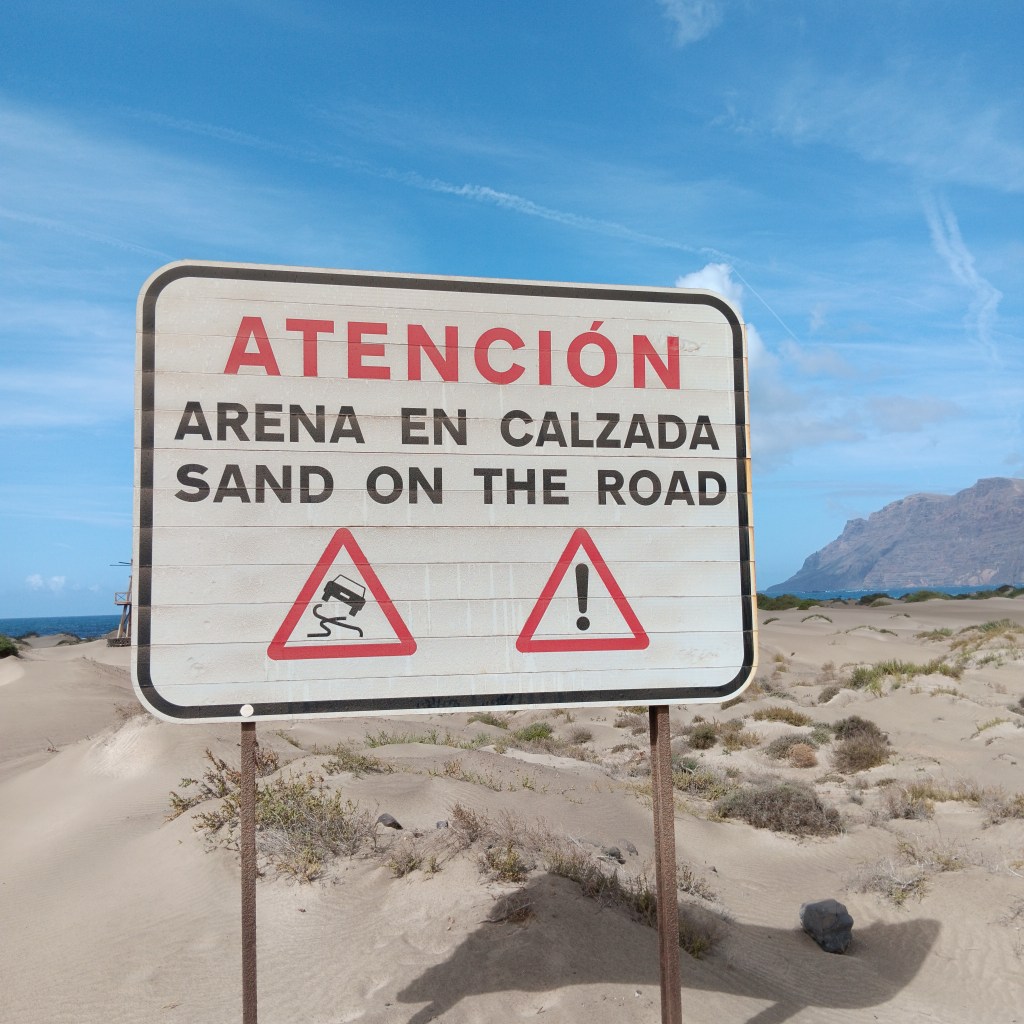
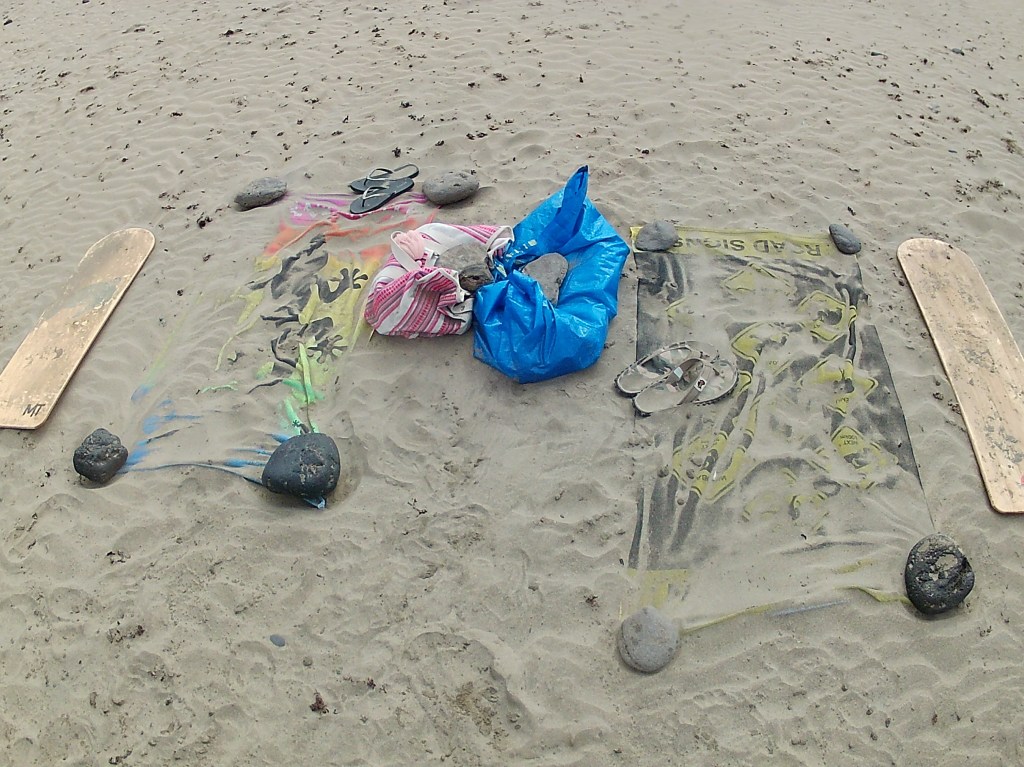
Famara is the best known Surf Beach on the island, and it didn’t disappoint. When you drive to it on the LZ402, the vast emptiness of the area is gobsmacking. The satnav says 5 miles to go and you can see the whole beach and town ahead. Unlike the volcanic rocks and debris that is scattered around other parts of the island, this is practically a desert, with sand dunes. On our first day, there was low cloud covering the mountains, and it turns out that this is a thing. The clouds are there in the morning, then burn off and it’s sunnier later in the day. And it is windy. This means sand is going to get everywhere. There are rock ‘shelters’ which are windbreaks, but you might have to dig out all of the sand to be able to use them.
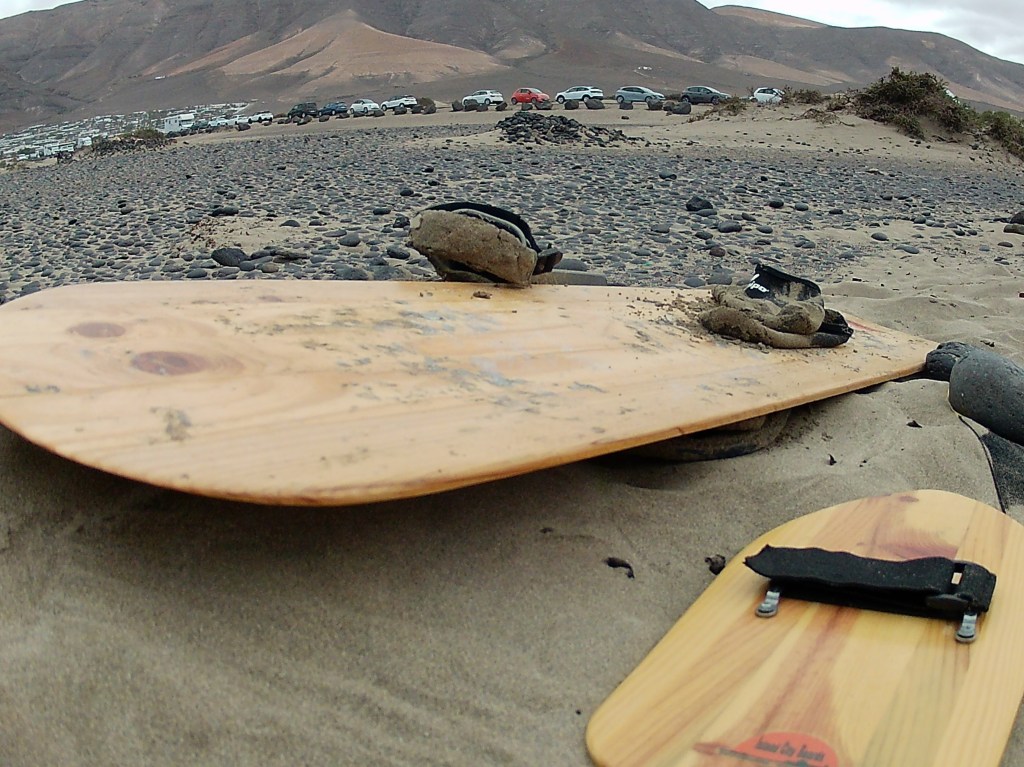
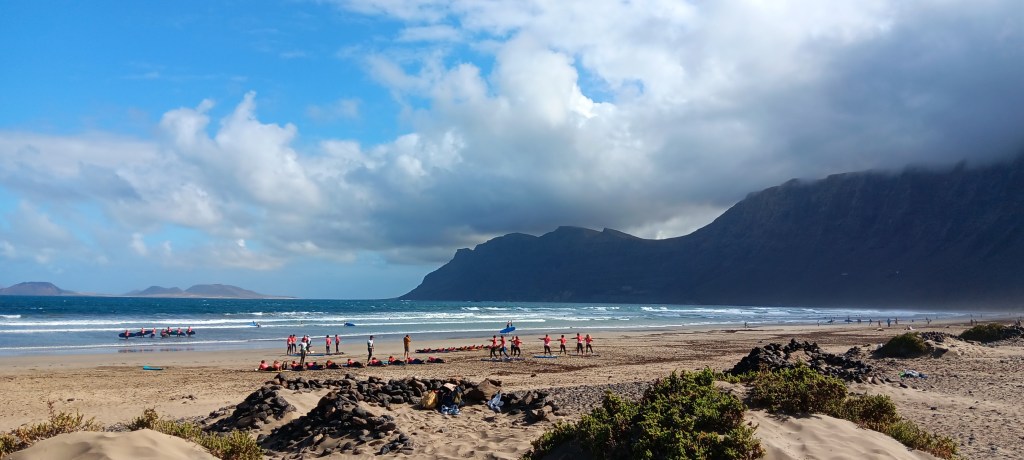
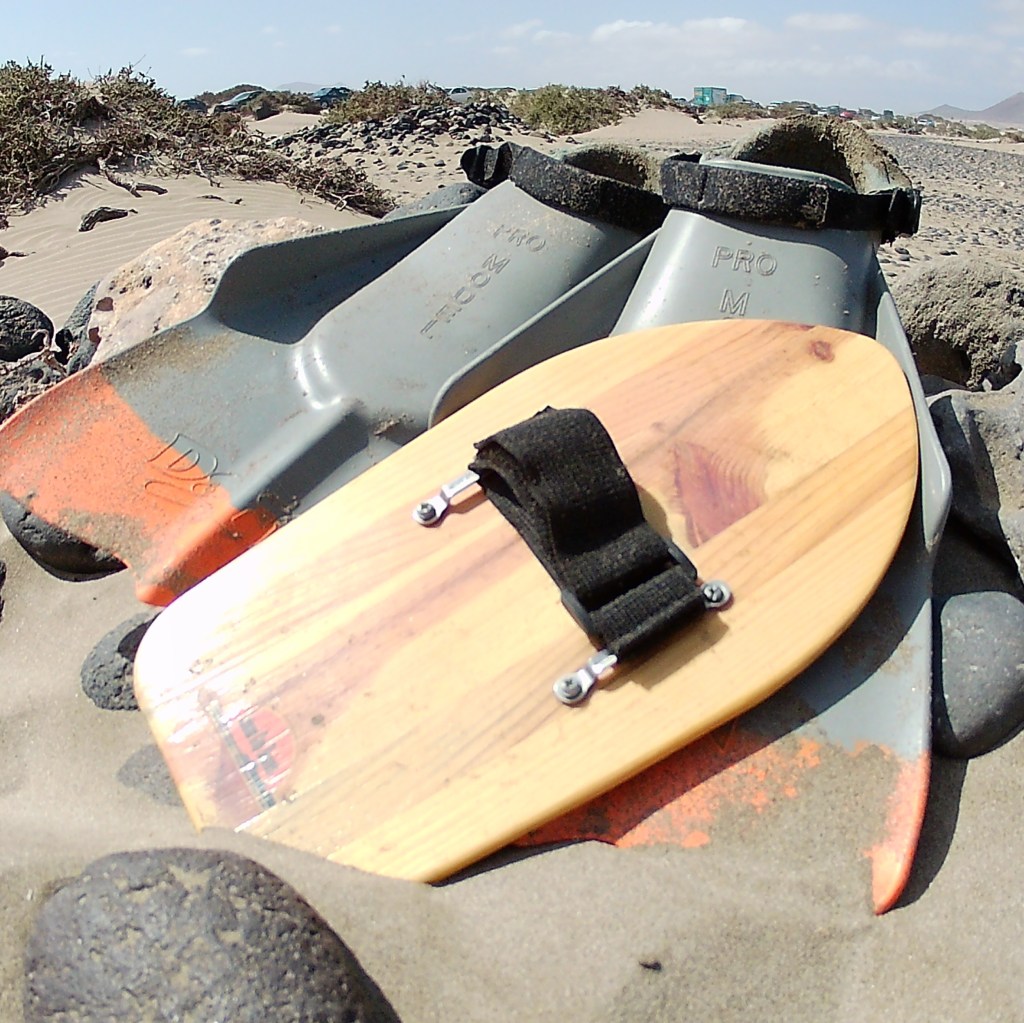
We ended up going to Famara five times on our trip. Although it was never perfect surf conditions (it was either an onshore or sideways wind), it really was an excellent place for boarding. Surfline reckoned it was ‘poor’, but it was 3 or 4 feet with a twelve second period. And being a long shallow sandy beach, there were plenty of long slides to the shore. It was here that I fully tested my Little Skidda. It worked so well, super fast and so much pulling power. It wasn’t the wave carrying me, it was the handplane driving me along. Another great thing was that the water temperature was around 23 degrees. Apparently, late September, early October is the sea’s warmest time. Some things to be wary of, there was a strong pull, not a rip, just a northward pull, which at times made it difficult to stay still. Because it’s so good for surfing, there are loads of Surf Schools, which can be a pain. There are gaps when they change around, but because of the pull, we would start away from them and then they would be on top of us. Finally, the rental surfboards tend to be proper boards, not foamies. There were a few near-misses with one woman, who had no control. Muy Peligroso! Any experienced surfers are much further out.
The village, Caleta de Famara is at the southern end and is, surprisingly, unspoilt by being a surf town. There’s a line of surf schools one side and then a couple of eateries on the other, and it’s still very Spanish. Which makes it great. There clearly are loads of visitors from different countries, but the feel of the village is genuine, not a ‘Patagonia Man’ Disneyfied version. The second Surf Shop I wanted to visit was Famara Power. This had a good selection of everything, clothing, wetsuits, boards, the lot! The man running the shop was really friendly and very knowledgeable about the surfing on the island. He told us where the best spot was on Famara beach, (which I’m not going to share) and said more about La Santa. I think it’s obvious, we loved Famara and will be returning.
The best thing about both Surf Shops we visited was that they understood and accepted that we were Bellyboarders. There was no negativity or snideness. There’s a lot of Boogie Boarders on the island, so maybe that’s why they were more accepting. They realise that you don’t have to stand up to surf.
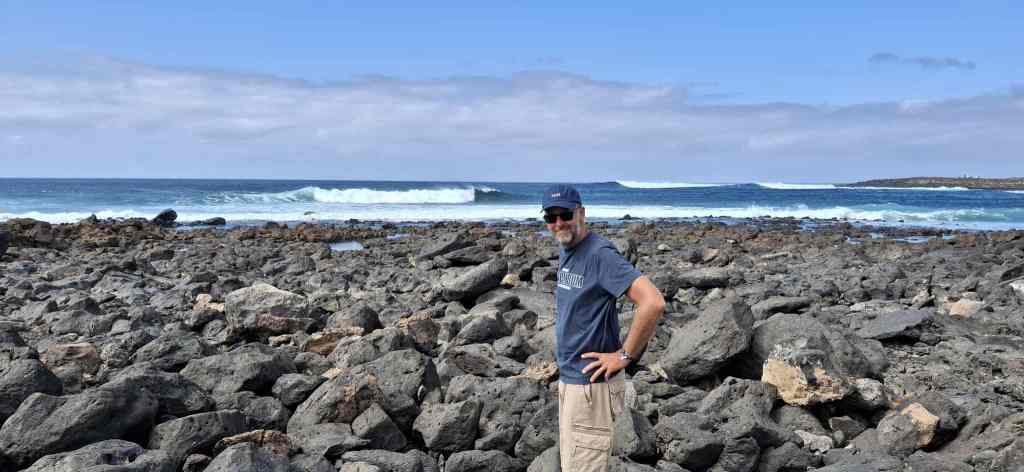
So, La Santa . Before we travelled out, we googled and watched videos and generally found out where we wanted to visit and where we didn’t. La Santa was definitely on the list, but would it be worth it? After recommendations, we were excited to finally park up in the town. Like Famara, it’s very Spanish. But, aside from a large poster for Quemao there wasn’t much relating to surf. In fact, it was more of a cycling place. (We were there two days before La Vuelta Lanzarote, a mammoth cycle ride around the island.) There were rocks and there were some waves out a bit, but nobody in the sea. Hmm, maybe there was a bit of exaggeration going on. At Famara Power, he told us about La Misteriosa and how La Santa is the Hawaii of The Canaries. We were like, really. We’d spent a few hours boarding at Famara and were going to head back to base, when I said “Let’s have another look at La Santa. Let’s give it a chance”.
When you drive in, you pass Club La Santa, this is most Triathletes’ Holy Grail, and for a short while I wondered if that was where the surfing took place. But it’s not. Just before entering the town, there’s a car park on the right. We pulled in, looked across the rocks and then saw what the fuss is all about.
As Nomads Land implied, it ain’t safe, You climb over rocks to get into the sea and the waves are breaking yards away. I have never seen waves so big, so close to the shore. It was amazing. We clambered over boulders and made ourselves comfortable and sat there for an hour or so, watching surfers and boogers risking injury to put on a show. And this wasn’t full on. Now I get the Hawaii reference. There was a small inlet and it looked like one side was the footsurfers and one side the Boogie Boarders. We were on the Boogs, most had helmets and all were flying down the walls of water. It was epic.
The Quemao is Lanzarote’s version of The Eddie. Surfers and Bodyboarders compete on the biggest waves of the year. The waiting period started in October and the competition could take place at any time between then and March. Everyone taking part is absolutely barking mad, but it will be something special to see.
My last words about Lanzarote are to say although it is a tourist destination, don’t expect everyone to speak fluent English. We brushed up on our basic Espanol and it helped, and it was appreciated.
So that’s my write-up. I thoroughly recommend Lanzarote as a Wave Catching Destination.
 Island City Boards
Leave a comment